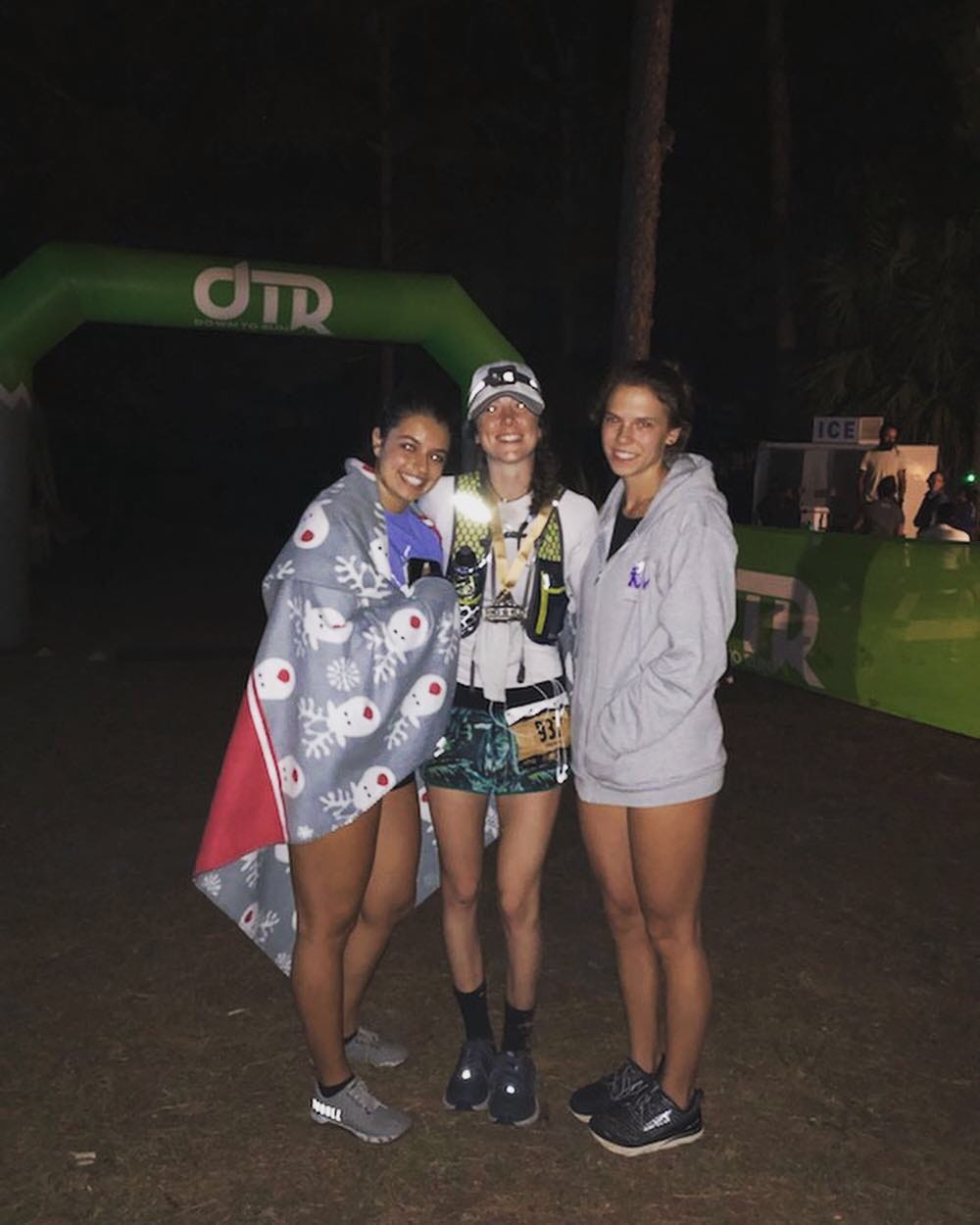
When I crossed the finish line of my first 50-miler in 2019, I never thought it would be seven years until I crossed the finish line of my first 100-miler.
I assumed it would be a smooth, linear trajectory. After that 50-miler would come a 100K. Then would come 100 miles. That’s how progress worked, right?
Wrong.
What ensued after that first ultra in 2019 was jarring, to say the least, for my high-achieving brain. At that first 50-miler, I spent miles 25 through 50 on and off throwing up, ended up completely depleted and dehydrated, and had to walk the final 12 miles to the finish. But I convinced myself the stomach issues were nothing more than rookie mistakes.
I figured I hadn’t fueled or hydrated enough. It was my first ultra, and I’d shown up pretty unprepared. I didn’t have any electrolytes, and while I’d packed plenty of snacks, I hadn’t brought any liquid calories or gels that would’ve been useful once I lost my appetite and couldn’t stomach solid food.
Despite desperately wanting to keep moving up in distance and earn that coveted 100-mile buckle, I decided another 50-miler would do me good. If I could nail my nutrition and hydration there first, then I’d move up to 100K or 100 miles.
I even hired a dietitian, who helped me develop what felt like a foolproof nutrition plan and tracked with what everyone else seemed to be doing: at least one gel every 20-30 minutes, LMNT in a bottle, plain water in a bladder, Tailwind as a backup source of liquid calories if I stopped being able to eat, and a few things like potatoes and muffins for when I wanted solid food.
I practiced it in training. It all went well. By the time I showed up to my next 50-miler, stomach issues weren’t even in the realm of possible problems I thought I’d face that day.
But at mile 28, I found myself on the side of the trail dry heaving and throwing up. And just like the first 50-miler, I spent the next 22 miles that way, barely making the cutoffs because I had to stop and throw up so frequently.
I finished proud that I’d completed another 50-mile race despite my stomach revolting the entire day. But more than anything, I was frustrated. I’d done everything right. How had this happened to me again?
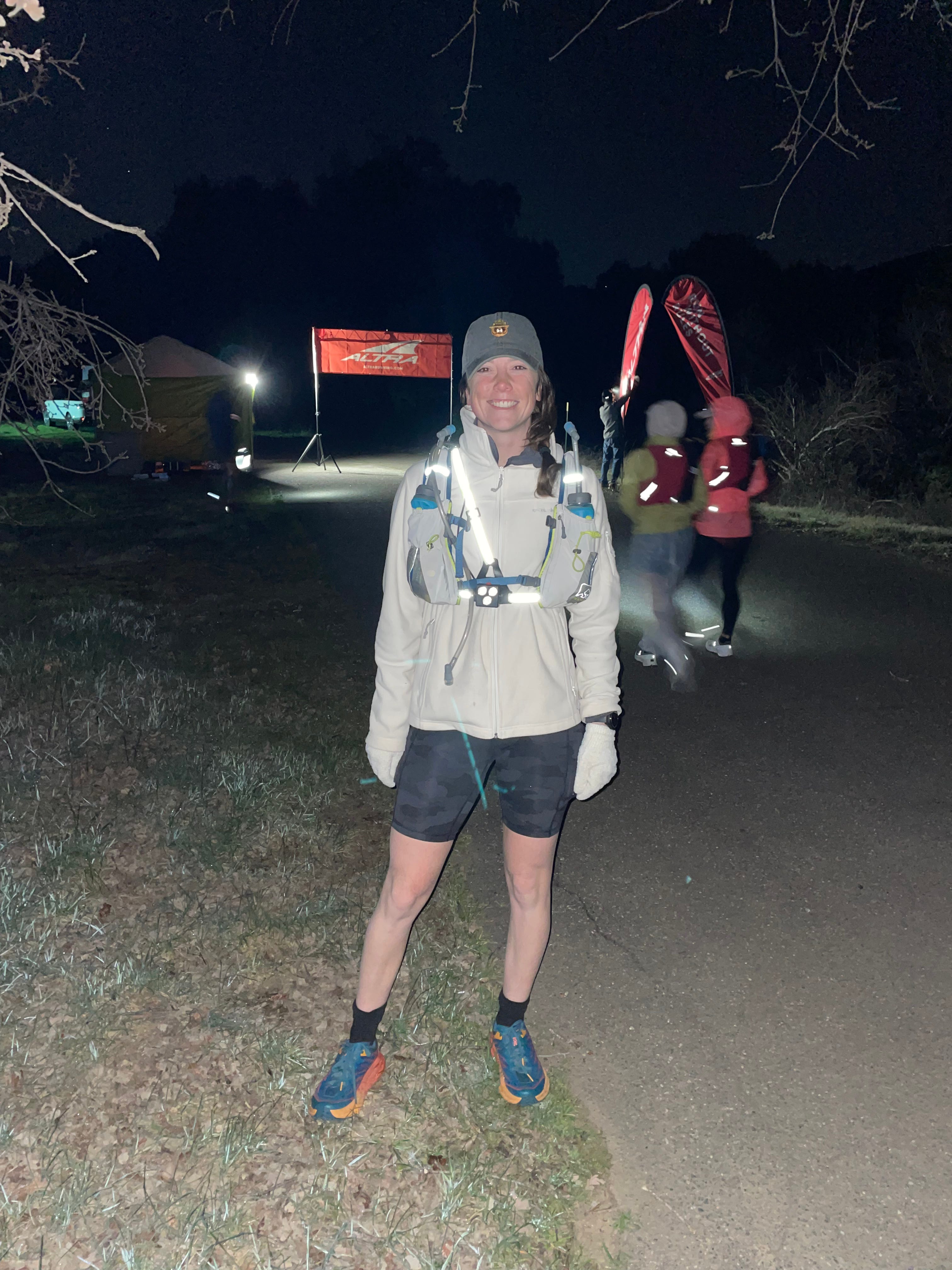
My legs felt ready for more, but I didn’t trust that my stomach could go any farther. Throwing up my way through a 50-mile race was hard enough. That wasn’t how I wanted to experience 100K or 100 miles. I’m not averse to a quick puke and rally, but spending half the day throwing up, barely moving forward, and unable to run at all? That’s not why I was out there.
So I held myself back again. And then again. And then again.
Ultra after ultra went by, and every race felt like groundhog day. Training would go perfectly. My nutrition would work exactly as planned. Then I’d get to race day, hit the 25+ mile mark, and it would be game over.
Five years and ten ultras went by like this. And still, I held onto the 100-mile dream. I wanted it so badly, and I loved running trails so much, that I had to believe the dream was there for a reason.
Sure, there were moments when I wondered if I should just stick to the marathon or 50K distances. Maybe my body just wasn't cut out for anything longer. Maybe I should just do the thing that felt easier - the thing that came with less resistance.
But I always came back to the same belief: we have curiosities and passions for a reason. It made no sense to me that something I was so intensely curious about - something I thought about every day - was not meant to happen.
So I kept showing up. Not without frustration, discouragement, and sometimes even embarrassment that this was taking me so long to figure out - especially when it seemed like everyone else figured it out so much faster.
I didn’t understand why my journey had to look this way. All I could do was hold onto faith, even when it wavered, that it would eventually lead me to somewhere good.
And finally, as I headed into my 11th ultra, at this point fully accepting the puke-fest that was waiting for me, I made one last hail mary call to a new dietitian.
It was a call I didn’t want to pay for, and honestly, one I didn’t think would make a difference. I’d already worked with multiple dietitians over the years, and none of them had been able to help.
But he’d come highly recommended, so I thought, “Fine, one last shot.”
Swish. That last shot ended up being the one that finally went in.
That dietitian gave me advice that was different from anything I’d heard before. Instead of telling me to train my gut to tolerate more gels, food, and fluid, he told me to put a hard-stop on artificial products altogether, especially anything containing stevia or citric acid, which were common irritants to sensitive stomachs.
His approach was almost the opposite of conventional wisdom: rely on simple, natural carbohydrates like maple syrup and honey, supplement with a few bland solid foods like rice and tortillas, and don’t obsess over hitting a certain number of carbs or calories per hour.
Instead, fuel by feel. Take in more when my stomach felt good and my body wanted it. But at the very first hint that my stomach might be heading in the wrong direction, back off without guilt. Don’t be afraid to take an hour off from fueling, and just focus on hydration, until I felt my stomach settle. The priority wasn’t maximizing carbohydrate intake at all costs. It was keeping my stomach calm enough that I could keep moving.
And with that, ultra #11 became the first ultra I ever finished without throwing up.
Ultra #12 proved it wasn’t a fluke.
Ultra #13 served as the final long training run before my first 100-miler.
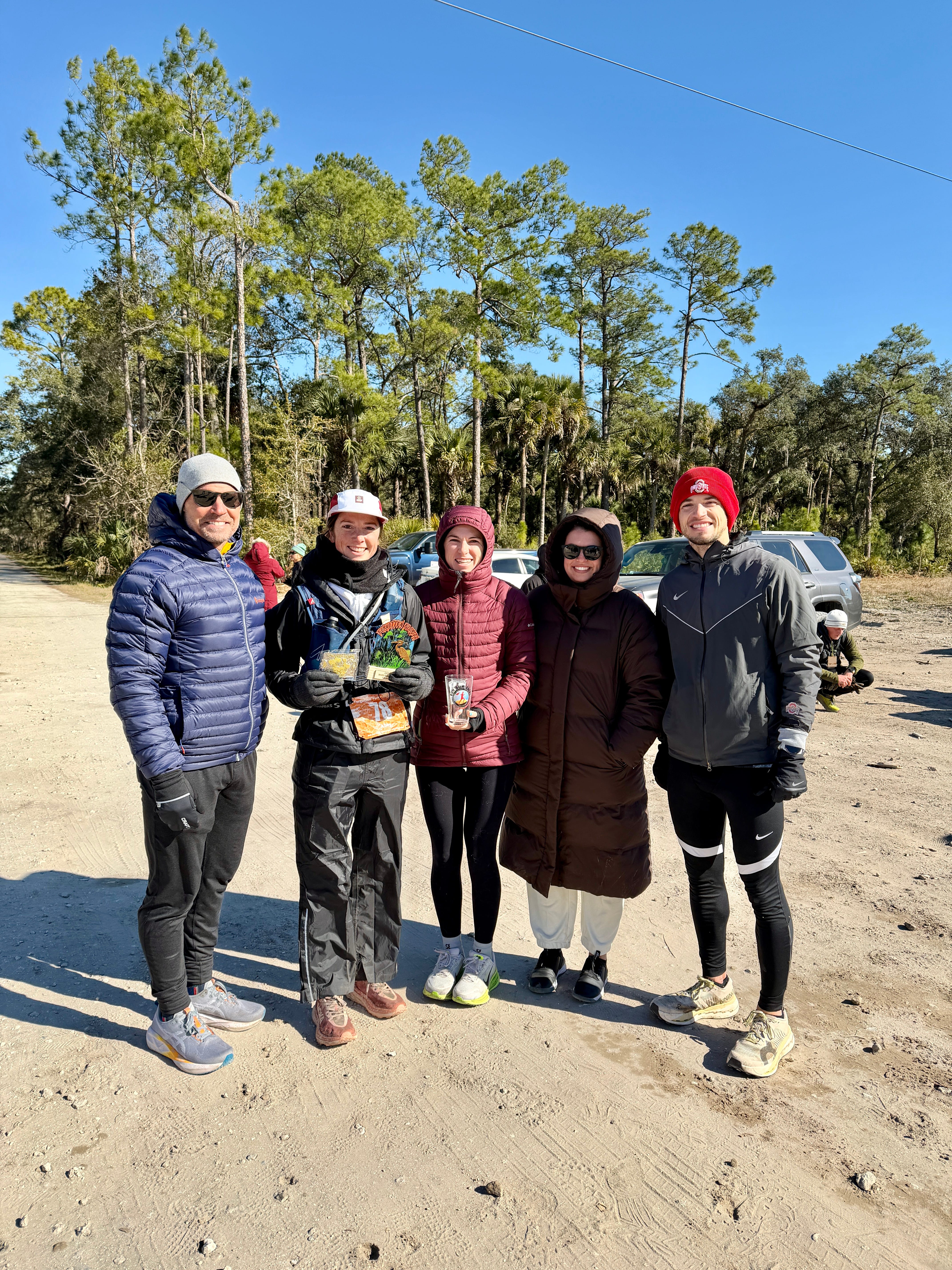
And ultra #14 was that 100-miler itself. I crossed the finish line in 27 hours and 39 minutes, as third overall female, after throwing up just once - at mile 80.
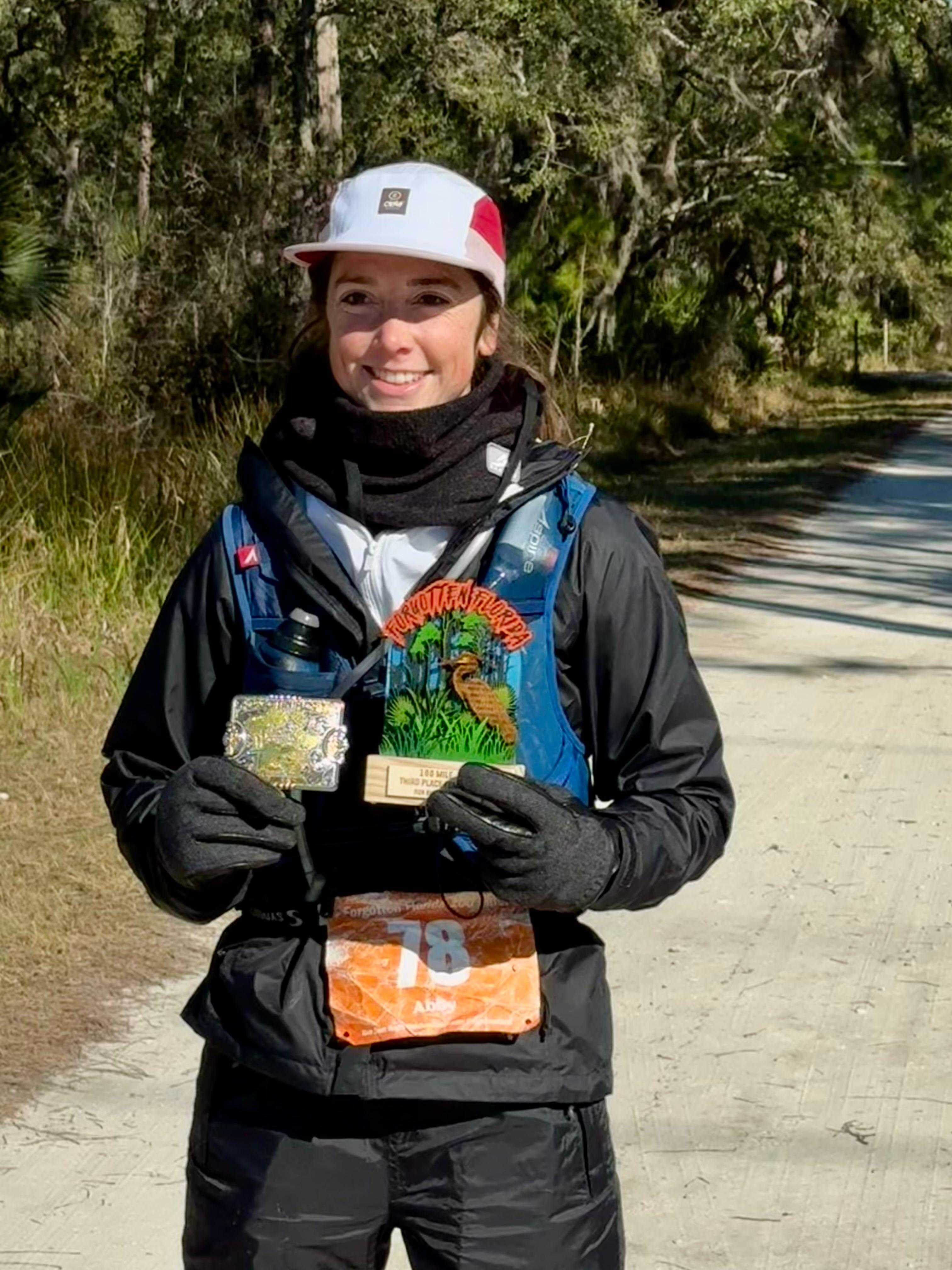
After spending nearly a decade unable to get through an ultra without hours of uncontrollable vomiting, constantly holding myself back, and wondering whether I'd been chasing a dream that was never really meant for me - I finally had my answer.
I had been right all along.
I was meant to be there.
What I learned is that one of the hardest parts about chasing a dream isn't the work itself. It's watching more and more time go by until you can’t help but start doubting yourself.
You watch people around you reach the milestone you thought you would have reached years ago. You wonder what they know that you don’t, what they’re doing differently, or whether they have something you don’t. At some point, the conversation in your head stops being, “How do I figure this out?” and starts being, “Maybe this just isn’t for me.”
That’s a painful place to live, because you don’t stop wanting the dream. You stop believing that you’re capable of it.
I’m sure there are dreams that aren’t meant for us. But I also think there are a lot of dreams people walk away from just because they took longer than expected. And that’s a tragedy, because time has very little to do with whether something is worth pursuing.
Some goals are achieved in a few months. Others take years. Some people find the right coach on their first try. Others work through five before they find the person who finally changes everything. Some people stumble into the solution to their problem almost by accident. Others go through years of trial and error.
None of that says anything about the value of the dream itself. And it certainly doesn’t tell you whether you’re capable of achieving it. The only thing it tells you is that you haven’t figured it out yet.
Of course, there are times when walking away is the right decision. Goals change. Priorities change. Life changes.
But I don’t think “it’s taking longer than I thought it would” is, by itself, a very good reason.
Because if I’d let the timeline make the decision for me, I never would’ve crossed the finish line of my first 100-miler.
So if you have a dream - like running your first half marathon, marathon, or ultra - and it’s taking a lot longer than you expected to get there, before you decide it’s just not meant for you or that you’re not capable, ask yourself:
Is that really what you believe?
Or are you just tired of how long it’s taking?
Don't let a long road convince you you're on the wrong one.