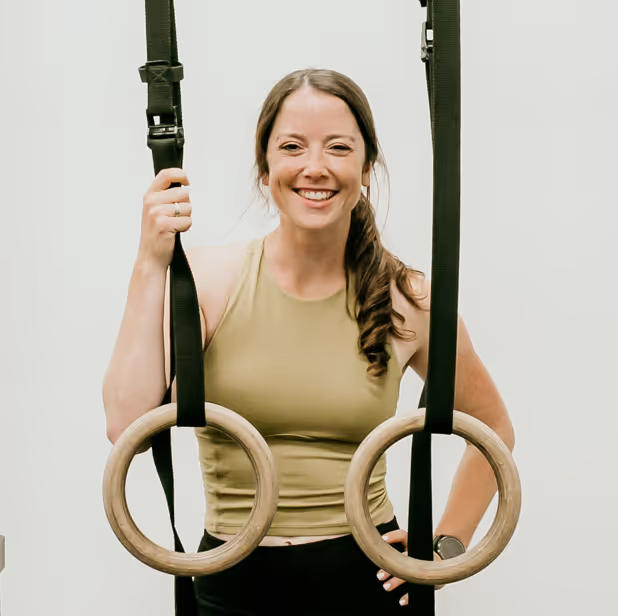
I’ve been training for ultras for the past seven years without ever having to step away because of burnout or injury. That doesn’t mean it’s looked the same the whole time. Different seasons have come with different goals, and my training has changed as I’ve gotten stronger. There were times - especially when I owned a gym - where the bare minimum was all I had the capacity for.
The more runners I talk to, the more I hear a different story. Burnout or injury pulling them away for months, sometimes years. It’s made my own consistency feel a little surprising, and has had me thinking about what’s actually allowed me to keep showing up, healthy and still having fun, through everything life has thrown at me.
When I really look at it, it comes down to a lot of small choices that add up over time.
Increasing mileage gradually
My mileage has gone up really slowly. Not over weeks or months, but over years.
When I first started ultrarunning, I was running two days a week. That eventually turned into three, then four, then five. Sometimes it still drops down to four when life gets busy or if I’m struggling to recover throughout the week.
Taking that kind of time doesn’t just let your body adapt - it gives your mind time to catch up too. You feel ready for more, instead of like you’re trying to keep up.
There was never a single moment where I suddenly became someone who could run more miles. It happened gradually, and it felt natural, because I gave it time.
Being flexible with mileage throughout the year
I don’t put a lot of meaning on miles per week or miles per month. It depends on what I’m training for, what my goals are, how I’m feeling, and any curveballs I’m dealing with outside of running.
I prefer running more miles because I love it, but I’ve run 50K-100K ultras successfully on less than 40 miles per week. There were seasons of life when I didn’t have the time to run more, or when work or life stress made it hard to recover throughout the week.
Some months are higher mileage, some are lower, and my weeks vary just as much. I’ve stopped trying to force mileage to look one specific way, and instead I stay flexible with what it looks like.
I lean into more miles when I’m feeling good, life allows, and it makes sense for my goals. And I pull back when I don’t have a big ultra on the horizon, when little niggles pop up, or when I’m focusing on other priorities in my life.
Training in the gym to actually get stronger
I was really lucky to end up with a lifting coach almost nine years ago who didn’t treat me like a “runner.” At the time, that was rare. If you walked into a gym and said you were a runner, especially as a woman, most strength coaches would hand you five-pound weights and have you doing endless sets of twenty.
But he taught me the basics with a barbell - squat, deadlift, bench press - and focused on building actual strength, mixing in phases where we focused on lower reps so I could increase the weight I was lifting. Not just doing “running-specific” exercises, but lifting heavy enough to make my bones more dense and my muscles and tendons more durable.
Just like my mileage, he prioritized gradual progression over years. That’s what allowed me to stay consistent without getting burnt out or injured, and without it ever interfering with my running. When you lift consistently and add weight slowly over time, you never end up so sore that it impacts your runs.
When strength training does interfere with running, it’s usually because of inconsistency - every session feels new to your body again - or because weight is added too quickly. Done right, you can build real strength that supports your running and your health.
Prioritizing rest
I love running, but I also love rest days. I take at least one full day off every week, and sometimes two. Recently I thought I might be getting sick, so I took three days off without trying to squeeze anything in or make it up later. After every ultra, no matter the distance, I take a full week off. For longer races like 100K or 100 miles, I take two weeks off.
I get that rest can feel scary. There’s this idea that you’ll start losing fitness right away. But fitness doesn’t disappear in a few days, or even a week or two - especially when you’ve been consistent for years. Pushing through when your body and mind clearly need a break is what actually leads to burnout or injury.
A few weeks before my first 100K in January 2025, I fell on the trail during my longest run and bruised my knee. I had to cut the run short - three hours instead of five - and I barely ran in the three weeks leading up to the race while it healed. It was nerve-wracking. I didn’t know if I’d be prepared. But I showed up healthy and had a great race.
That experience made it clear that one 4-6 week training block isn’t what determines how a race goes. What matters is the consistency in the months (and years) leading up to it. A few weeks off can’t take that away.
There’s also value in intentionally letting fitness drop during certain times of the year. Your body can’t stay in peak shape year-round - it’s not sustainable. Pulling back gives your body the chance to recover, absorb the work you’ve already done, and reset before building again.
That’s what allows you to keep progressing - running farther and faster year after year - instead of desperately trying to hold onto fitness and slowly wearing yourself down.
Letting go of perfectionism
There’s also a mental side that’s harder to explain, but just as important. Not analyzing every run or trying to decide what one off day means. Not spiraling because something felt harder than it “should.” Just showing up and staying in it, letting a bad run be a bad run and moving on.
I didn’t always do that. I used to finish a run and immediately start picking it apart - pace, heart rate, splits, how it felt, what it meant. If a run didn’t go well or I wasn’t seeing constant progress, it felt like a problem I needed to solve right away, like I was somehow getting off track.
But over time, I stopped needing every run to tell me something. Some days feel good, some days don’t, and most fall somewhere in the middle. None of it needs a reaction or means that much in the bigger picture.
With that pressure gone, running felt different - simpler, more relaxed, and something I could have fun doing again.
And that approach is part of what’s made it easy to be consistent, because I’m not drained from overthinking every run or discouraged by one hard day. It’s made running something I can keep coming back to, day after day, without needing it to be perfect.
If you want to be more consistent
When I look back on the past seven years, it’s not one thing that’s allowed me to stay consistent. My training has changed constantly. My mileage has gone up and down. There were weeks where I did a lot, and weeks where I didn’t have much to give.
What’s made the difference is that I’ve been willing to be flexible with my training and adjust when needed. Not fighting what my life looked like or where my body was at any given week, but working with both.
And if you’re trying to PR your marathon or run your first ultra, that’s what matters. Not one perfect training cycle, but training that still works when things don’t go perfectly, so you can keep showing up over months and years.
If that feels unclear right now - how to structure your training, how to adjust, what matters for your goals - you don’t have to keep trying to piece it together on your own.
I offer 1:1 running and strength coaching where your training is built around your life, not the other way around. We communicate weekly, adjust as needed, and make decisions based on how you’re actually feeling - so you can stay consistent, keep progressing toward your goals, and have fun with running.